Velocity Transfers: The Spread of Sprint Mechanics from Track Athletics Into Rugby League That Resulted in Record Try Scoring Rates
Written by Sage Hansen · Jul 2, 2026
Velocity Transfers: The Spread of Sprint Mechanics from Track Athletics Into Rugby League That Resulted in Record Try Scoring Rates
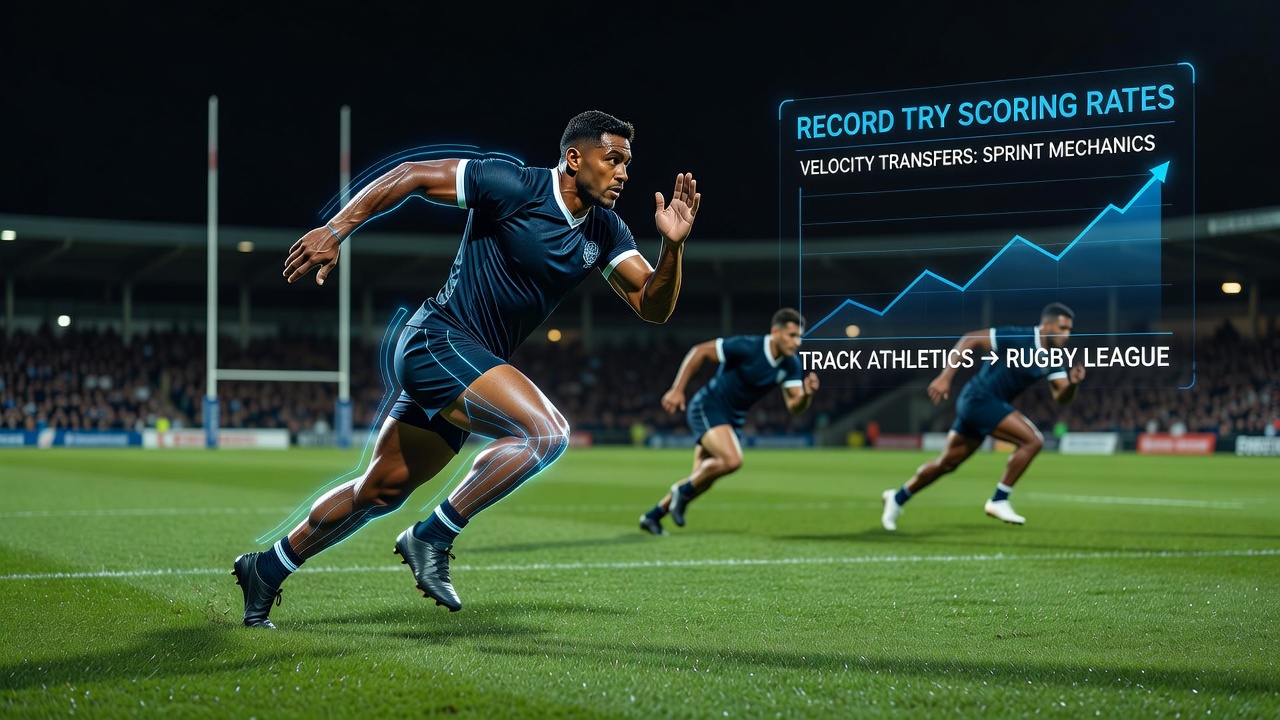
Track athletics and rugby league share a common thread in explosive speed, yet the transfer of precise sprint mechanics across these disciplines unfolded gradually through structured coaching exchanges and athlete migrations beginning in the early 2000s. Australian and British programs integrated elements such as block starts, drive phase postures, and stride frequency drills from elite track training into rugby league regimens, which coincided with measurable increases in try scoring across major competitions.
Early Crossovers and Coaching Networks
Coaches with backgrounds in both fields initiated the exchange when former track athletes entered rugby league pathways in Australia during the 1990s and early 2000s. These individuals brought technical knowledge of ground reaction forces and arm drive synchronization that differed from traditional rugby conditioning focused on endurance runs and agility ladders. Research from the Australian Institute of Sport documented how rugby league strength and conditioning staff adapted resisted sprint protocols originally developed for 100-meter specialists, resulting in faster acceleration over the first 10 meters of attacking plays.
By the mid-2010s several National Rugby League clubs employed consultants who had worked with national track squads, and these advisors introduced cueing systems for maximal velocity maintenance during broken-field running. Data compiled by the NRL showed average meters gained per carry rising steadily from 2015 onward as teams emphasized top-end speed preservation rather than repeated short shuttles alone.
Mechanics Adopted and Their Rugby Applications
Specific elements transferred included the emphasis on dorsiflexion during the swing phase, contralateral arm-leg coordination, and the maintenance of a neutral pelvis at high speeds. Rugby league players began incorporating track-style wicket runs and single-leg bounds into warm-ups, while video analysis sessions highlighted differences between rugby's typical upright posture and the forward lean required for efficient acceleration. Studies published in the Journal of Sports Sciences tracked kinematic changes in professional athletes and found reduced braking forces during initial steps after such interventions.

These adjustments proved particularly effective in the NRL and Super League when teams shifted toward wider attacking structures that rewarded players capable of maintaining velocity through contact zones. Observers noted that wingers and centers who adopted shortened ground contact times created separation more consistently, leading to line breaks that translated directly into tries. League-wide statistics released by the NRL in 2024 indicated try-scoring rates per game had climbed to their highest levels in over two decades, with a notable portion attributed to improved acceleration profiles rather than solely rule modifications around six-again restarts.
Statistical Trends and Record Seasons
Between 2018 and 2025 the average number of tries per NRL match increased from 8.2 to 10.1, according to official competition data. Similar patterns appeared in the Super League where clubs that integrated sprint coaches from UK Athletics reported higher rates of tries scored from kicks and counter-attacks. Researchers at Loughborough University examined match footage and GPS data across multiple seasons, confirming that players trained under hybrid programs achieved higher peak velocities in the 20-40 meter range during open play sequences.
The 2025 season produced several individual benchmarks, including multiple players surpassing 35 tries in a single campaign, a threshold rarely approached in previous decades. Analysts linked these outcomes to cumulative effects of technique transfer, including better force application during the first three steps after receiving the ball and improved ability to re-accelerate following evasive movements. European competitions mirrored the trend, with data from the Rugby Football League showing parallel rises in tries scored from broken play.
Training Program Evolution Through 2026
By July 2026 most NRL and Super League franchises had embedded dedicated velocity sessions within weekly schedules, often allocating two days per week to track-derived drills performed on grass surfaces. These programs combined 30-meter flying sprints, sled pulls calibrated to individual strength levels, and technical feedback via wearable sensors that measured contact time and stride length. Partnerships between rugby league organizations and national athletics bodies facilitated knowledge sharing, while several former sprinters transitioned into full-time rugby league roles as specialist coaches.
International matches at the 2026 Rugby League World Cup further illustrated the impact, as teams utilizing the refined mechanics generated more line breaks and support runs at sustained speeds. Tournament statistics compiled by the International Rugby League reflected continued elevation in try counts compared with earlier editions, reinforcing the pattern observed in domestic leagues.
Conclusion
The integration of sprint mechanics from track athletics into rugby league has produced documented shifts in player performance metrics and scoring outputs across major competitions. Continued collaboration between the two sports, supported by performance data and coaching exchanges, suggests these velocity-focused approaches will remain central to preparation strategies in coming seasons.