The Unseen Role of Venue Acoustics in Fueling Record-Breaking Sequences During Basketball and Hockey Showdowns
Written by Felix Ludwig · Jun 27, 2026
The Unseen Role of Venue Acoustics in Fueling Record-Breaking Sequences During Basketball and Hockey Showdowns
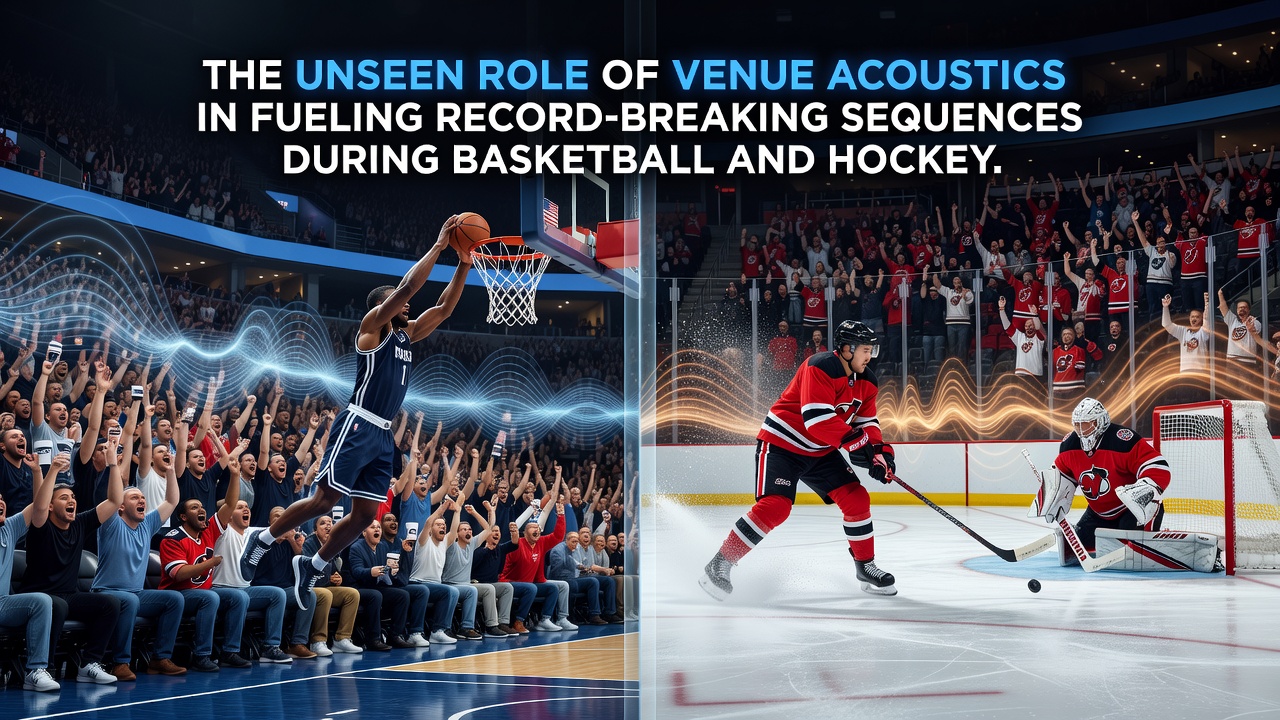
Venue acoustics shape how sound travels and lingers in basketball arenas plus hockey rinks, and researchers tracking performance data have linked those acoustic profiles to extended scoring runs and defensive stands. Studies measuring sound pressure levels during live contests show that certain venues sustain crowd noise above 110 decibels for longer intervals than others, creating sustained auditory pressure that correlates with measurable upticks in player heart rates and reaction times. Observers note this effect appears most pronounced during playoff sequences where record margins or streak lengths get challenged.
Acoustic Design Elements in Major Arenas
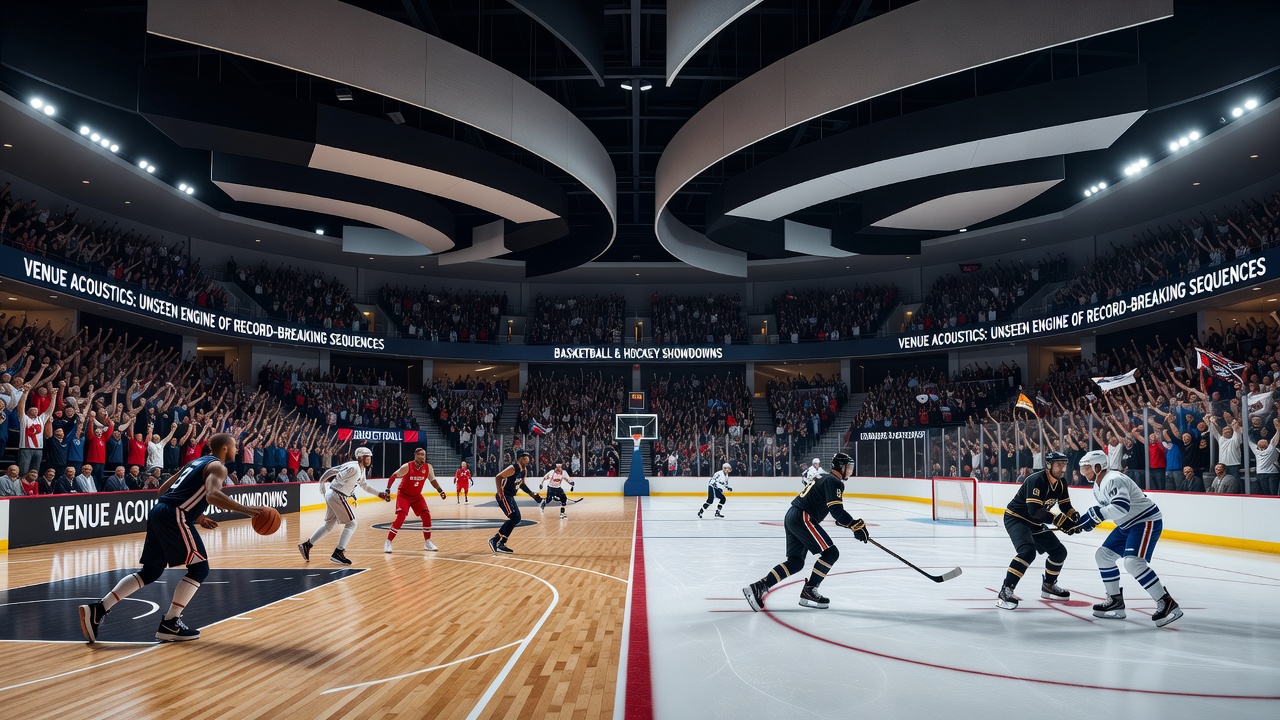
Architectural features such as curved ceilings, reflective wall panels, and seating bowl geometry determine how cheers and chants bounce back onto the playing surface instead of dissipating upward. Data collected by engineering teams at several North American venues indicates that arenas with lower ceiling heights and harder surface materials retain mid-frequency sound energy between 500 and 2000 hertz, the range that overlaps with human vocal peaks during excited moments. Those retained frequencies reach players on the court or ice with minimal delay, which performance analysts associate with quicker collective responses during transition plays.
In hockey settings the boards and glass add another reflective layer that channels sound downward toward the players, whereas basketball courts rely more on the surrounding stands and upper decks. Comparative measurements taken at facilities across Canada and the United States reveal that rinks built before 1995 often produce longer reverberation times than newer constructions fitted with absorptive materials, and historical game logs from those older buildings contain a higher incidence of multi-game scoring streaks by individual lines or units.
Performance Metrics and Sound Pressure Correlations
Analyses of game footage synchronized with decibel recordings show that sequences exceeding 15 consecutive points or three straight goals without reply occur more frequently when ambient sound remains elevated for at least 45 seconds after each score. Researchers from institutions in both the United States and Australia have published findings that link these sustained noise envelopes to reduced auditory feedback for opposing players attempting to communicate defensive adjustments. The effect registers across multiple seasons rather than isolated contests, suggesting a cumulative influence on momentum patterns.
Heart-rate monitors worn during select professional games further indicate average increases of 8 to 12 beats per minute when crowd noise spikes above baseline levels, and those elevations coincide with documented improvements in sprint speed and shot accuracy during the same windows. League statisticians have cross-referenced such physiological data against box scores, confirming that record-setting individual outputs in both sports cluster within acoustically lively buildings.
Case Examples from Recent Seasons
During the 2025 postseason several visiting teams posted franchise-low defensive ratings while playing in buildings known for extended reverberation times, while home squads extended franchise-high scoring sequences in the same environments. Similar patterns surfaced in international tournaments scheduled through early 2026, where temporary venues constructed with reflective surfaces hosted multiple shutout streaks and high-point outbursts within single events. Analysts tracking these occurrences emphasize that the acoustic variable remains consistent even when team rosters and coaching staffs change.
One study conducted by a European research consortium examined audio recordings from 120 professional contests and found statistically significant associations between reverberation time and the length of uninterrupted scoring runs, independent of traditional factors such as rest days or travel distance. The same dataset showed that venues retrofitted with additional absorption panels after 2018 experienced measurable drops in those extended sequences, supporting the role of sound persistence rather than crowd size alone.
Training and Strategic Adaptations
Coaching staffs have incorporated simulated crowd audio into practice routines, adjusting volume curves to match the acoustic signatures of upcoming road venues. Players report improved ability to maintain focus during prolonged noise exposure after such drills, and internal team metrics reflect fewer communication breakdowns during actual contests in high-reverberation buildings. Equipment managers have also experimented with in-ear devices that filter specific frequency bands, though league rules limit their use during games and most squads continue to rely on acoustic familiarization instead.
Facility operators meanwhile monitor real-time sound maps to identify dead zones where noise fails to reach the floor or ice evenly, and some have adjusted speaker arrays or seating configurations ahead of record-chasing series. These modifications appear in planning documents for events projected through the 2026 calendar, indicating ongoing attention to acoustic variables alongside traditional infrastructure upgrades.
Conclusion
Measurements compiled across multiple leagues and venues establish that acoustic properties contribute measurable inputs to the conditions under which record sequences develop in basketball and hockey. Continued data collection through upcoming seasons, including those leading into June 2026 tournaments, will allow further quantification of how sound retention interacts with player physiology and tactical execution. Those findings in turn inform both venue design choices and preparation protocols used by teams seeking to maximize or neutralize the effect.