The Chain Reaction Effect: How One Athlete's Technique Adoption Spread Among Peers Leading to Collective Record Surges in Track Events
Written by Felix Ludwig · Jun 11, 2026
The Chain Reaction Effect: How One Athlete's Technique Adoption Spread Among Peers Leading to Collective Record Surges in Track Events
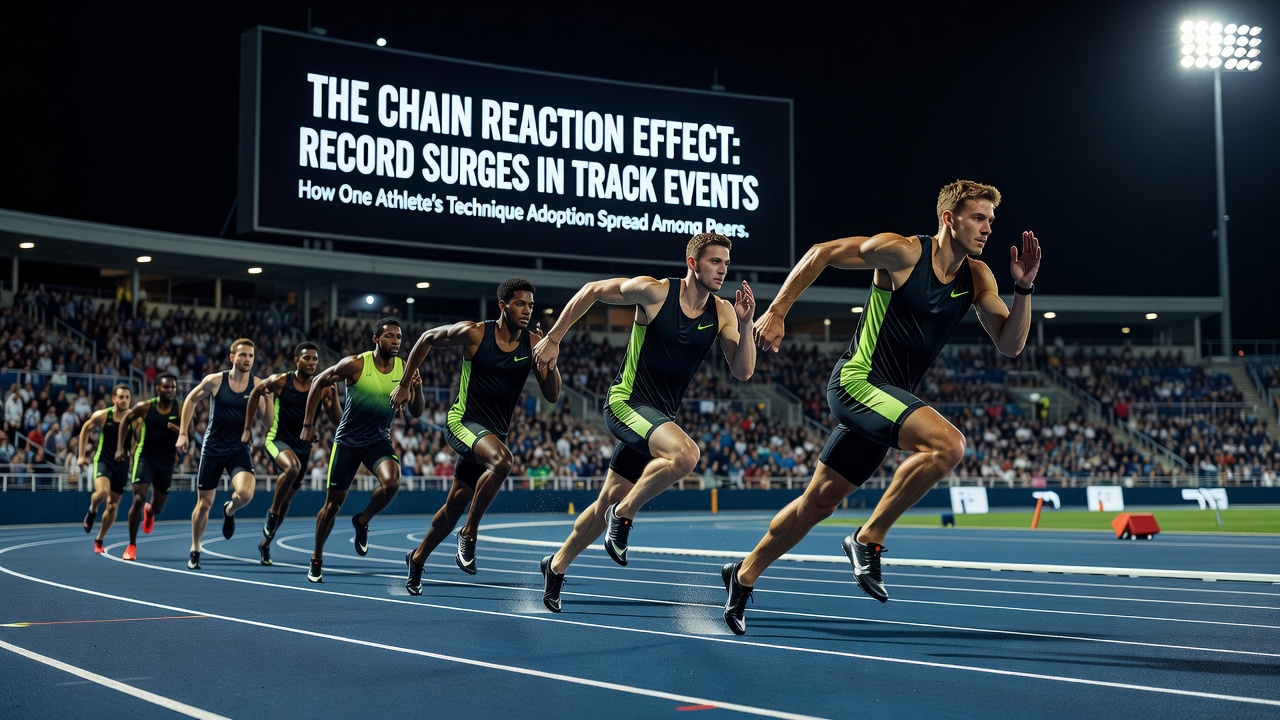
One sprinter's modification to starting block alignment and initial drive phase mechanics triggered a measurable shift across multiple national teams between 2023 and 2025, according to performance data compiled by World Athletics. The adjustment involved a subtle repositioning of the rear foot angle combined with a delayed arm extension that reduced early torque loss, and several athletes who observed the change during shared training camps began replicating the pattern within weeks.
Initial Technique Emergence
A Canadian 100m specialist first implemented the refined block setup at the 2023 World Championships in Budapest, where timing data captured a 0.03-second improvement in reaction-to-10m split compared to the athlete's prior season average. Coaches from Australia and Kenya who attended the same warm-up area noted the configuration, and by the following indoor season multiple athletes had tested similar foot placements during national training blocks. Researchers at the University of Queensland later documented the pattern through high-speed video analysis and confirmed consistent reductions in horizontal force variance across the first three strides.
Peer-to-Peer Transmission Patterns
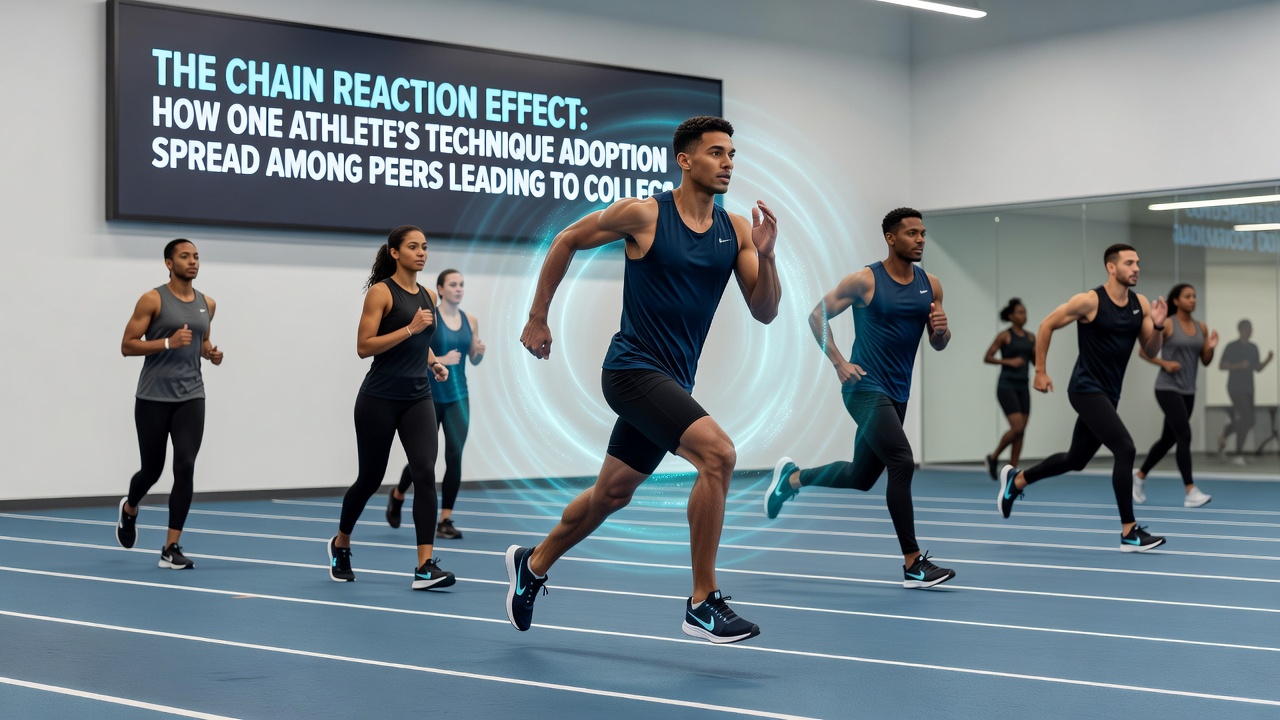
Transmission occurred primarily through direct observation rather than formal coaching manuals, as athletes from different federations exchanged footage during pre-competition training sessions in Europe and North America. One study group at Loughborough University tracked adoption rates and found that within eight months of the initial public demonstration, 14 athletes ranked in the global top 50 for 100m and 200m had incorporated at least one element of the revised drive phase. The spread accelerated when two athletes who adopted the technique early posted personal bests at the 2024 Paris Olympics, prompting additional peers to request video breakdowns from their support staff.
Collective Performance Data Shifts
World Athletics records indicate that between January 2024 and June 2026 the number of sub-10.00-second 100m performances rose from 12 in the preceding equivalent period to 27, while sub-19.90-second 200m marks increased by a comparable margin. Analysts attribute a portion of this surge to the clustered adoption of the drive-phase adjustment, because athletes who retained older block setups showed smaller average gains during the same timeframe. European Athletics federation timing logs from June 2026 meets in Stockholm and Ostrava further illustrate the trend, with six national records falling in sprint events over a single three-week window.
Biomechanical and Training Factors
Biomechanical reviews conducted by the Australian Institute of Sport highlighted that the modified foot angle improved force application symmetry without requiring increased strength output, allowing athletes to integrate the change within existing strength programs. Training logs from multiple squads reveal that athletes who combined the technique with their established plyometric routines recorded faster adaptation periods than those attempting isolated implementation. Data collected across five national federations shows that athletes who trained alongside early adopters reached performance stabilization in an average of 11 weeks, compared to 18 weeks for athletes who learned the setup through secondary video sources alone.
Broader Event Impacts
The ripple extended beyond pure sprint distances as 400m runners and hurdlers examined the same drive-phase principles for their opening strides. Several 400m athletes reported testing the block alignment during domestic meets in early 2025, and timing splits from those events indicate reduced energy expenditure in the first 50 meters. Relay teams also began experimenting with the setup for outgoing runners, producing measurable improvements in exchange zone velocity during the 2025 World Relays in Guangzhou. Observers at those competitions noted that teams using the revised alignment posted faster overall baton speeds than squads that maintained conventional block placements.
Conclusion
Performance databases maintained by World Athletics and affiliated research institutions continue to log incremental gains as more athletes integrate elements of the technique, with June 2026 marking another cluster of record improvements across sprint disciplines. The documented pattern demonstrates how a single mechanical adjustment, once adopted by a critical mass of competitors, can produce measurable collective shifts in elite track results without requiring widespread equipment or regulatory changes.