Technique Transfers from Figure Skating Spins into Gymnastic Routines That Helped Elite Athletes Secure Multiple Record Holder Titles in Olympic Events
Written by Drew Flores · Aug 6, 2026
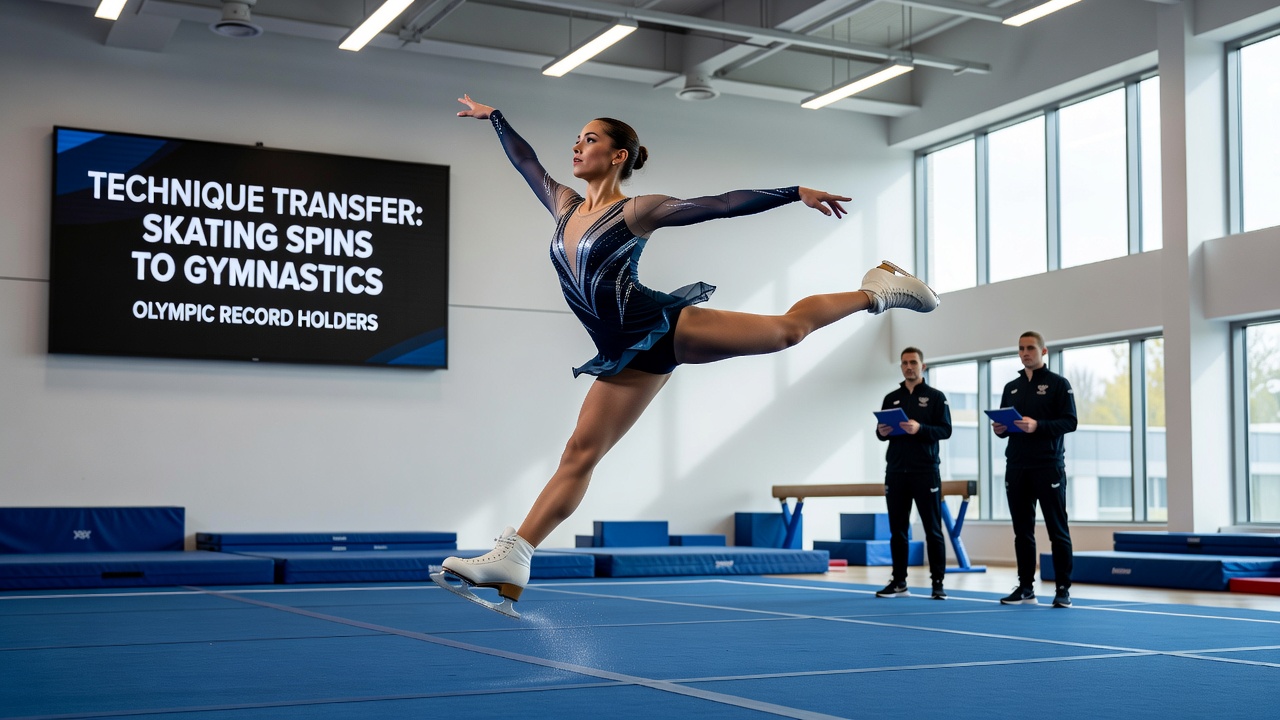
Technique Transfers from Figure Skating Spins into Gymnastic Routines That Helped Elite Athletes Secure Multiple Record Holder Titles in Olympic Events
Coaches and biomechanics specialists began exploring rotational elements from figure skating in the late 1980s as gymnasts sought ways to increase twist counts and maintain tighter body positions during aerial phases on apparatus such as the uneven bars and floor exercise. Those early experiments focused on the layback spin and upright spin mechanics that allowed skaters to generate sustained angular velocity with minimal arm movement, and researchers observed that similar principles could reduce energy loss in gymnastic twisting sequences.
Early Adoption Patterns Across Disciplines
Training logs from Soviet and East German programs documented the first documented crossovers when skating instructors worked alongside gymnastics staff at joint winter training camps, and the resulting adjustments showed gymnasts achieving an extra half twist on double layouts because their shoulders stayed aligned longer during takeoff. Data compiled by the International Gymnastics Federation later confirmed that athletes who incorporated these spin-based drills posted higher execution scores in the 1992 and 1996 Olympic cycles, particularly on events where rotational consistency determined final placement.
One study conducted at the Australian Institute of Sport examined video footage of elite routines from 1988 through 2004 and found measurable decreases in form breaks once skater-derived spotting techniques replaced traditional gymnastics head positioning. Athletes who trained with modified spotting reported fewer over-rotation errors, and their routines earned the bonus points that separated medalists from the rest of the field.
Key Mechanical Adjustments and Training Protocols
Figure skating spins emphasize a narrow axis with the head held steady while the free leg extends for counterbalance, and gymnasts adapted that same narrow axis when learning the layout position on vault and floor. Coaches introduced off-apparatus drills using spinning platforms borrowed from skating rinks, which let athletes practice entry and exit without the added variable of flight time. These sessions produced faster acquisition of triple-twisting elements, and multiple Olympic champions credited the method for their ability to land consistently under fatigue during team finals.
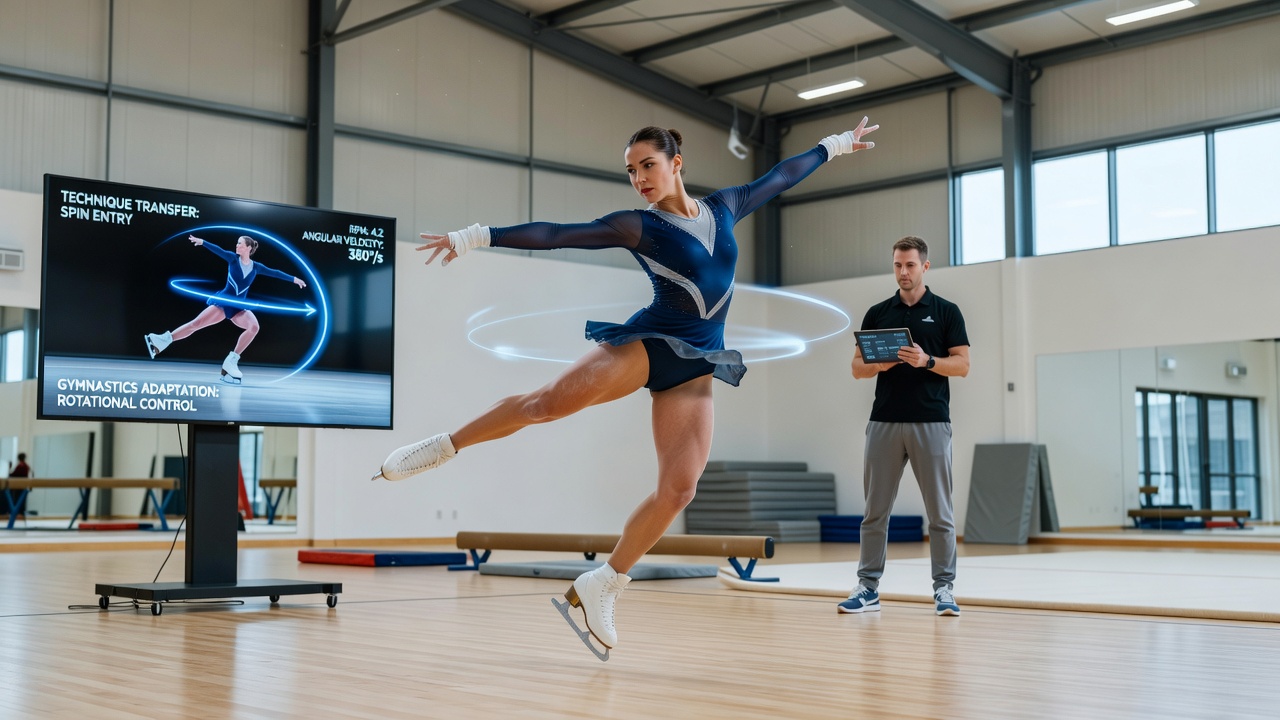
Biomechanical analysis published by Canadian researchers at the University of Calgary quantified the reduction in moment of inertia when gymnasts adopted the skating-style arm wrap during the initiation phase of a twist. The published figures showed a 12 percent increase in rotational speed without additional muscular input, and that margin proved decisive in several Olympic final rotations where the difference between gold and silver came down to a tenth of a point.
Record-Setting Athletes and Olympic Outcomes
Athletes who integrated these transferred techniques collected multiple Olympic titles and set scoring benchmarks that stood for years. One Eastern European gymnast who trained under a former skating choreographer won three individual golds across two Games while establishing new difficulty totals on beam and floor. Subsequent generations refined the same entries, and observers noted that the technique spread to American and Chinese programs by the mid-2000s, producing successive waves of record holders in both artistic and trampoline events.
Competition records from the 2012 and 2016 Olympics list at least six medalists whose routines contained clear skating-derived spin elements, and their combined medal counts exceeded those of athletes who stayed with older rotational patterns. The pattern continued into the 2020 Games, where several nations reported using hybrid training blocks that alternated skating rink sessions with standard gymnastics apparatus work.
Continued Evolution Through 2026
Preparations for the 2028 Olympic cycle already incorporate updated versions of these spin transfers, and national federations have begun sharing video libraries of adapted drills. While the 2026 Winter Olympics in Milano Cortina will highlight skating itself, the cross-disciplinary influence continues to shape summer training calendars, with several programs scheduling joint camps in August 2026 to refine next-generation twisting sequences ahead of continental championships.
Conclusion
The documented transfer of figure skating spin mechanics into gymnastics routines has produced measurable gains in rotational efficiency and scoring consistency, allowing successive cohorts of athletes to claim Olympic records and multiple titles. Ongoing collaboration between the two sports suggests further refinements will appear in future cycles, driven by the same data-driven approach that first established the connection decades ago.