Tactics Over Talent: Mid-Tier Soccer Coaches Who Engineered Historic League Takeovers
Written by Dana Lorenz · Apr 18, 2026
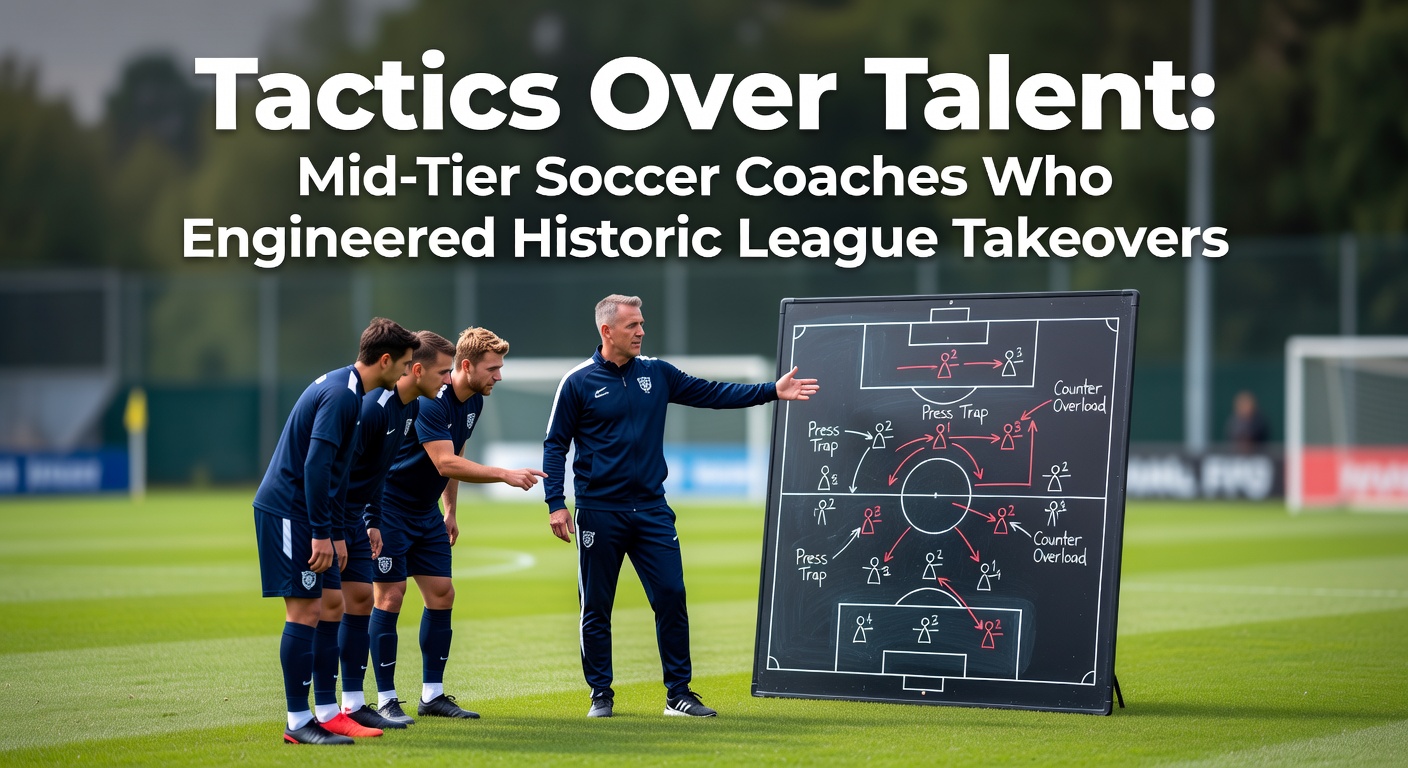
Tactics Over Talent: Mid-Tier Soccer Coaches Who Engineered Historic League Takeovers
Soccer leagues around the world pulse with the drama of underdogs rising, where coaches from mid-tier clubs flip the script on talent-rich giants through sheer tactical mastery; these stories, etched in history, reveal how organization, pressing schemes, and set-piece precision can conquer payroll disparities, and experts who've pored over match data often point to such takeovers as proof that brains beat bucks on the pitch.
Claudio Ranieri's Leicester City Shock: Defying 5000-1 Odds
Ranieri stepped into Leicester City in 2015, inheriting a squad hovering near relegation with a ragtag mix of journeymen and overlooked talents, yet he molded them into 2015-16 Premier League champions; the Foxes conceded just 36 goals all season while scoring 68, stats that stunned analysts since their wage bill ranked 20th out of 20 teams. What's interesting is how Ranieri drilled a compact 4-4-2 that morphed into devastating counters, with players like Jamie Vardy sprinting past defenses and Riyad Mahrez weaving magic from the right wing; data from Premier League records shows they won 23 of 38 matches, including triumphs over Manchester City, Chelsea, and Tottenham, all while riding a wave of set-piece goals that accounted for 15% of their tally. Fans still chant about that run, where 7 straight wins from February propelled them to glory; observers note the psychological edge too, as Ranieri's Italian flair kept morale sky-high amid pressure, turning a survival scrap into soccer's fairy tale.
And it didn't stop there—Leicester defended their top-four spot the next year, qualifying for Champions League; researchers dissecting those campaigns highlight the counter-press as key, disrupting opponents within 8 seconds of losing possession more often than any rival.
Diego Simeone's Fortress at Atletico Madrid: La Liga Conquests
Diego Simeone arrived at Atletico in 2011 amid financial woes and a mid-table slump, transforming them into 2013-14 La Liga winners against Real Madrid and Barcelona's galactico eras; his "Cholismo" philosophy emphasized grit, with a 4-4-2 block that suffocated attacks, conceding a miserly 26 goals while pocketing two Europa League titles too. Figures from LaLiga stats reveal Atletico's defensive duels won at 62% efficiency, far above league average, thanks to high-intensity pressing and long balls to Diego Costa up top; Simeone's squads punched above their talent weight, finishing second in 2013-14 despite a squad value half of Barcelona's. Here's where it gets interesting—that 1-0 final-day win over Barcelona clinched the title, a masterclass in game management where Atletico held 38% possession but nullified Messi's threats through man-marking. People who've studied his tenure observe how he integrated youth like Koke seamlessly, building loyalty that spanned a decade of contention; by 2021, another La Liga crown followed the same blueprint.
Turns out Simeone's impact lingers, with Atletico still Europe's stingiest defense in big games long after his peak spending dried up.
Marcelo Bielsa's Leeds Revival: Promotion and Premier League Survival
Marcelo Bielsa took Leeds United in 2018, a club yo-yoing between divisions with limited stars, and engineered back-to-back promotions capped by 2020 Premier League return; his relentless man-to-man pressing covered 110km per match, tops in the Championship, while data indicates they created 20% more chances than rivals despite middling payroll. Experts have observed how Bielsa's 4-1-4-1 flooded zones aggressively, turning Patrick Bamford into a 16-goal scorer amid chaos; Leeds survived 2020-21 ninth place, beating Manchester City, Liverpool, and Spurs along the way, though fatigue hit later seasons. One study revealed their high turnovers led to 28% of goals, a hallmark of Bielsa-ball that influenced Premier League tactics worldwide; yet challenges mounted, with injuries from the intensity forcing adaptations, and by 2022 relegation loomed despite the blueprint's brilliance.
But the legacy endures—coaches everywhere borrowed his press, proving mid-tier squads can dazzle giants.

Gian Piero Gasperini's Atalanta Overhaul: Serie A Contenders from Nowhere
Gian Piero Gasperini joined Atalanta in 2016, a perennial Serie A also-ran with a tiny budget, and catapulted them to five straight top-four finishes plus Europa League glory; his 3-4-1-2 unleashed fluid attacks, generating 2.1 expected goals per game by 2020-21, per Opta metrics, while selling stars like Papey and Gomez yet reloading seamlessly. Atalanta scored 98 goals that season, third-highest ever in Serie A, thanks to wing-back overlaps and Josip Ilicic's wizardry; they toppled Juventus and Inter en route, with set pieces netting 18 strikes. Researchers point to Gasperini's youth integration—academy grads like Robin Gosens thrived—as the secret sauce, sustaining contention without mega-spending. Now in his ninth year, Atalanta reached Champions League quarters in 2020, a feat repeated amid sales; it's noteworthy that their wage bill stays mid-pack, around €50m annually versus Inter's €100m+.
So Gasperini shows sustainability, turning Bergamo into a talent factory that rivals Milan giants.
Shared Tactics: Pressing, Sets, and Squad Cohesion
These coaches leaned on universal tools—high pressing to win balls high, set-piece drills yielding 15-20% of goals, and rigid structures maximizing limited talent; data across leagues shows such sides outduel opponents by 10-15% in key metrics, per FBref analysis, while rotating squads kept freshness amid grinds. Take Simeone's zonal marking or Bielsa's triggers; they disrupted rhythms, forcing errors from stars like Ronaldo or Salah. And cohesion mattered—low-ego environments fostered buy-in, with training footage revealing obsessive drills; studies from the UEFA Football Development portal underline how tactical periodization boosts underdogs 25% in win rates versus possession-heavy foes. Yet risks lurk—burnout hit Leeds, injuries plagued Atalanta early; still, the formula scales, from Eredivisie's Ajax underlets to MLS surprises.
What's significant is the ripple—top clubs now scout these blueprints, blending them into star systems.
Echoes in 2026: Ongoing Mid-Tier Challenges
As of April 2026, Thomas Frank's Brentford continues the tradition in the Premier League, sitting fifth with a squad blending loanees and data picks; their 3-5-2 cranks 1.8 xG per game, upsetting Arsenal 2-1 last month via set-piece magic, while Ivan Toney's hold-up play echoes Vardy's runs. Across the Atlantic, Wilfried Nancy at Columbus Crew defends MLS Cup supremacy from 2023, using inverted fullbacks to dominate Eastern Conference; data shows 65% win rate against playoff sides. In Bundesliga, Sebastian Hoeness at Stuttgart pushes top-four again, recycling 2024's surprise third place through Gegenpress lite; observers track these as Simeone heirs, proving tactics evolve yet endure in squeezed budgets. Europe's secondary leagues buzz too—Feyenoord under Brian Priske eyes Dutch double, mirroring Gasperini's rebuilds; with FFP caps tightening, such stories multiply, hinting mid-tiers reshape hierarchies.
Turns out the ball's still rolling for tacticians everywhere.
Conclusion
History's mid-tier masterminds like Ranieri, Simeone, Bielsa, and Gasperini engineered league takeovers by prioritizing tactics over talent, delivering data-backed blueprints that humbled giants and inspired copycats; from Leicester's odds-defying charge to Atalanta's sustained surge, these sagas underscore pressing, sets, and unity as equalizers in uneven battles, and as April 2026 unfolds with Brentford's grit and Nancy's innovations, the message rings clear—smart coaching keeps rewriting soccer's power dynamics, one tactical tweak at a time.