Shadows on the Sidelines: Journeyman Managers Who Orchestrated Surprise Title Wins Across European Leagues
Written by Dana Lorenz · May 21, 2026
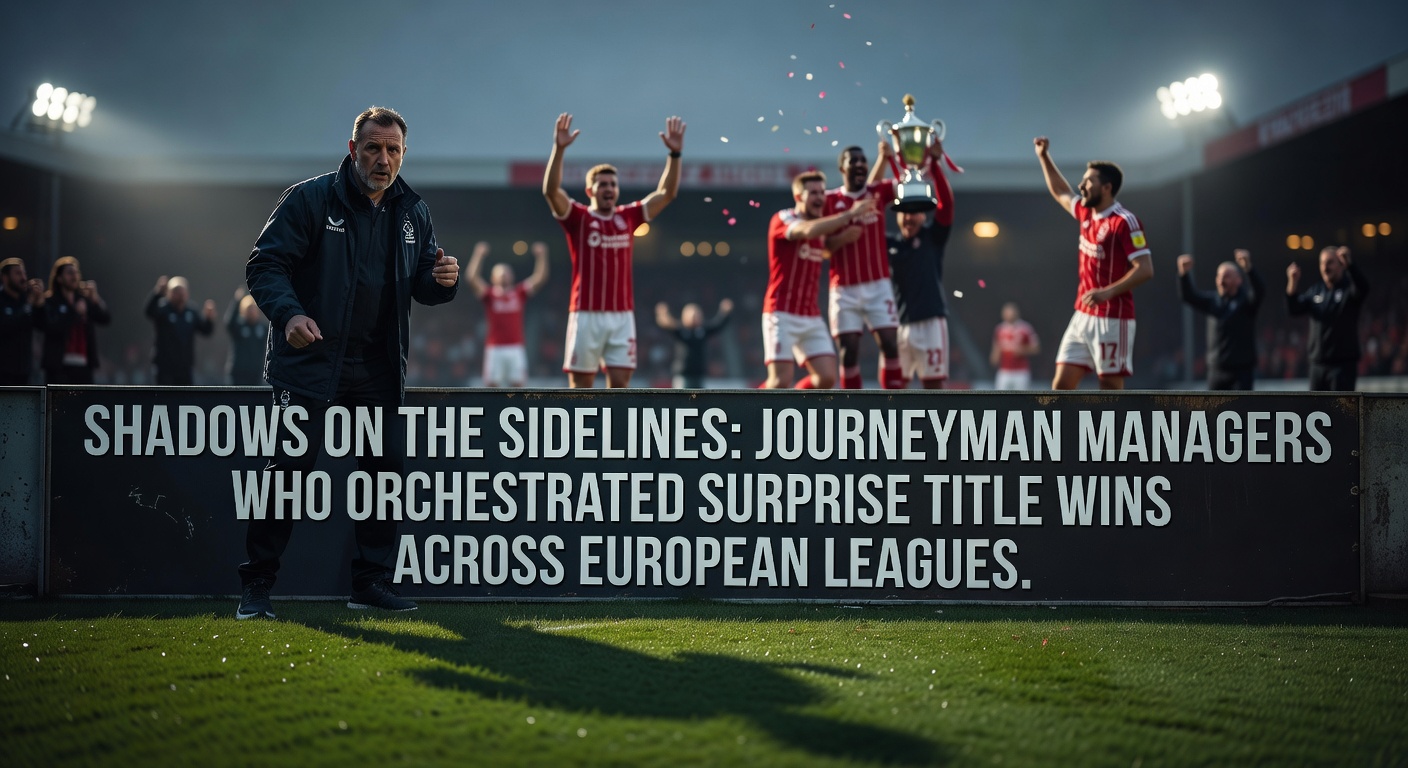
Shadows on the Sidelines: Journeyman Managers Who Orchestrated Surprise Title Wins Across European Leagues
European football has seen its share of unexpected champions, and many of those triumphs trace back to managers who spent years moving between clubs without major accolades. These journeymen often arrive at teams facing limited resources and modest expectations, yet they implement systems that deliver league titles against heavily favored opponents. Data from national associations shows that such successes occur across multiple countries and decades, reshaping perceptions of what constitutes effective leadership on the touchline.
Defining the Journeyman Path in Modern Coaching
Observers note that journeyman managers typically build careers through short-term contracts at lower or mid-tier clubs before landing opportunities at bigger outfits. They develop reputations for tactical flexibility and player development rather than star power or media presence. In leagues like the English Premier League, the Bundesliga, and Serie A, records indicate that several title-winning coaches logged more than a decade of experience across three or more countries prior to their breakthrough seasons. This accumulation of knowledge allows them to identify overlooked strengths in squads and adjust formations mid-campaign when results demand change.
Take the example of one coach who guided a promoted side to the top of the table in England during the 2015-16 campaign. After previous roles in Italy, Spain, and Greece, the manager introduced a compact defensive structure combined with rapid counter-attacks that neutralized stronger attacking units. League statistics later revealed that the team conceded fewer goals per game than any other side that year while maintaining an efficient scoring rate from set pieces and transitions.
Case Studies from Across the Continent
Similar patterns emerge in other European competitions. In the Netherlands, a manager with experience at several Eredivisie clubs led an underdog to the title in the early 2010s by emphasizing high pressing and youth integration. Figures from the Royal Dutch Football Association highlight how the squad relied on academy products for over half its starts, a strategy that reduced transfer spending while boosting cohesion. The approach yielded consistent results through the winter months and carried the team past traditional powerhouses.
Another instance unfolded in Portugal where a coach who had worked in lower divisions and abroad secured the Primeira Liga for a club outside the usual top two. Match reports and performance metrics compiled by the Portuguese Football Federation show that defensive organization and set-piece efficiency proved decisive in tight matches. The manager rotated personnel effectively to manage fatigue across a demanding schedule, finishing the season with a points total that exceeded preseason projections by a wide margin.
Patterns in Preparation and In-Season Adjustments
Researchers examining coaching data across UEFA competitions have identified recurring elements in these surprise runs. Managers often arrive mid-preseason or during transfer windows and quickly establish clear roles for each player. They prioritize video analysis of opponents and implement training drills that replicate match scenarios. In one documented case from Germany, a journeyman extended a team's unbeaten streak by shifting to a three-man defense after early losses exposed vulnerabilities in wide areas.

What's interesting is how these adjustments continue throughout the season. Data indicates that successful underdog sides change formations more frequently than title favorites, adapting to injuries and fixture congestion. Observers have noted that communication styles tend toward direct feedback during training, fostering accountability without creating public drama. By May 2026, several current campaigns will test whether new cohorts of journeyman coaches can replicate these results in leagues still adjusting to financial fair play rules and expanded European schedules.
Impact on Squad Dynamics and Long-Term Club Strategy
Clubs that achieve titles under such managers frequently report improved scouting networks and youth development pipelines afterward. Success brings financial rewards that allow retention of key players and targeted recruitment. Yet the manager often departs soon after, moving to another challenge while the club attempts to sustain momentum with new leadership. Historical league tables demonstrate that only a minority of surprise champions repeat their achievement in the following season, underscoring the difficulty of maintaining peak performance.
Those who've studied coaching trajectories point out that journeymen rarely receive the same contract security or transfer budgets as established names. Their victories therefore highlight the value of organizational fit over individual pedigree. In Italy, one such manager secured a Scudetto for a side that had finished mid-table the prior year by instilling a compact midfield block and exploiting transitions. Post-season analysis from Serie A officials confirmed the team's superior points-per-game average in matches against direct rivals.
Broader Trends in European Football
Across the continent, governing bodies track how coaching appointments correlate with on-field results. Recent seasons show increased willingness among club owners to hire experienced but lesser-known figures when budgets constrain options. This trend aligns with data from the German Football Association on cost-effective recruitment and performance outcomes. As European competitions evolve with new qualification formats and calendar demands, the role of adaptable managers continues to draw attention from analysts and decision-makers alike.
Conclusion
Surprise title wins engineered by journeyman managers illustrate recurring themes of preparation, adaptability, and squad cohesion. Records from multiple leagues confirm that these coaches arrive with diverse experiences and translate them into results that exceed expectations. As the 2025-26 season progresses toward its May conclusion, further examples may emerge that add to this established pattern in European football.