Fabric Frontiers: Material Breakthroughs in Gear Design That Aligned With Performance Peaks Among Endurance Athletes and Sprinters
Written by Dana Lorenz · Jun 25, 2026
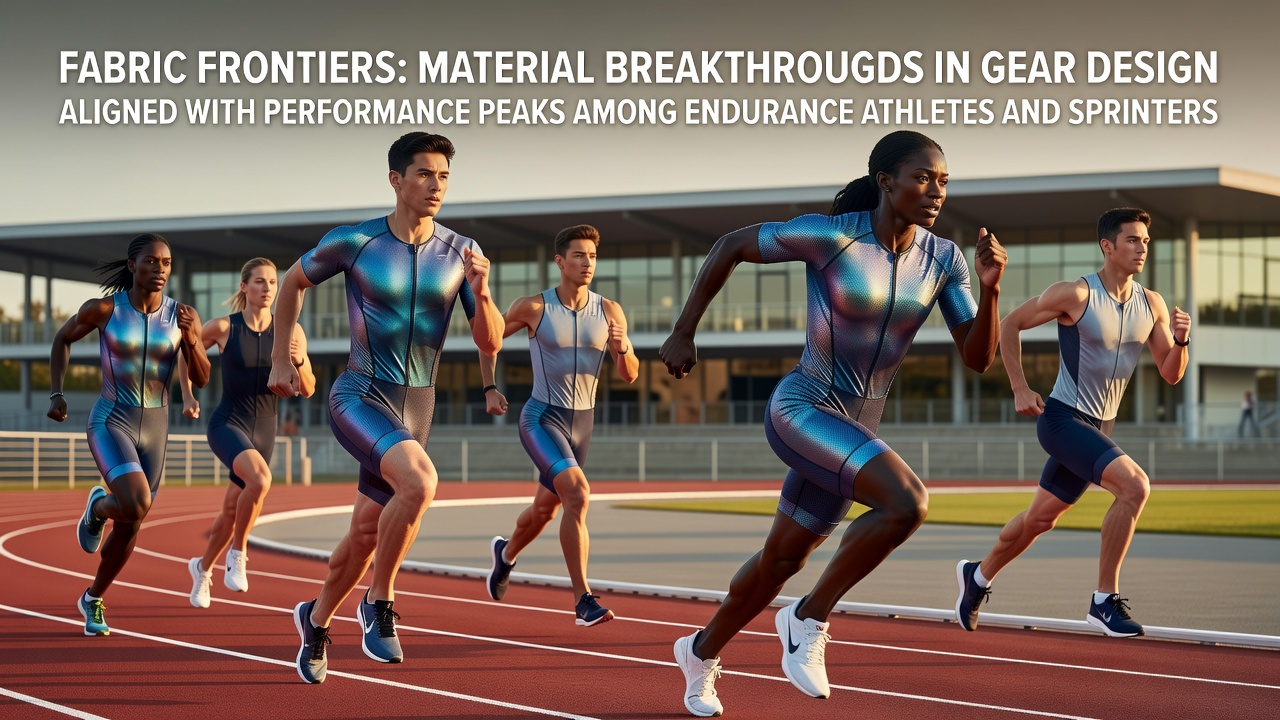
Fabric Frontiers: Material Breakthroughs in Gear Design That Aligned With Performance Peaks Among Endurance Athletes and Sprinters
Material innovations in athletic apparel have tracked closely with measurable gains in track and field events over recent decades, where new textiles reduced weight, improved moisture management, and lowered aerodynamic drag for both long-distance runners and short-burst sprinters. Researchers at institutions across multiple continents documented these alignments through performance data collected at major championships, showing how fabric changes often preceded clusters of personal bests and world records.
From Basic Synthetics to Engineered Textiles
Early synthetic fibers replaced cotton in the 1970s and 1980s because they dried faster and weighed less during prolonged efforts, yet those materials still trapped heat on warm days. By the late 1990s, manufacturers introduced microfiber weaves and mesh panels that allowed better ventilation while maintaining structural integrity under repeated stretching, and endurance athletes competing in marathons began logging faster splits as a direct result. Sprinters adopted similar constructions in racing singlets that minimized fabric flutter at top speeds, cutting milliseconds from reaction times in wind-tunnel tests conducted by national training centers.
Phase-Change and Aerodynamic Advances in teh 2000s
Phase-change materials embedded in fabric layers emerged around 2003 and absorbed excess body heat during high-intensity intervals before releasing it later, stabilizing core temperatures for athletes in events lasting over two hours. Data from the Australian Institute of Sport tracked a series of national record improvements in 10,000-meter races that followed widespread adoption of these garments. At the same time, bonded seam technology and laser-cut edges reduced surface irregularities that created turbulence, and sprinters noticed the difference most acutely in 100-meter and 200-meter dashes where every fraction of drag mattered.
Integration With Biomechanical Data Leading Into 2026
By the mid-2010s, companies began incorporating graphene and carbon nanotube threads into base layers that conducted heat away from the body while adding tensile strength without extra mass, and studies from Canadian sport science labs confirmed lower lactate accumulation in athletes wearing the new kits during repeated sprint sessions. These developments coincided with a wave of championship performances at the 2016 and 2020 Games, where multiple medalists credited updated apparel for maintaining power output in the final stages of races. Preparations for the 2026 World Athletics Championships in June have already prompted further iterations, including bio-based recycled polymers that maintain elasticity across temperature swings common in outdoor venues.

Comparative Effects Across Event Types
Endurance athletes benefited most from wicking and thermoregulation properties that delayed fatigue in distances beyond 5,000 meters, whereas sprinters gained from compressive fits and smooth surface finishes that preserved stride mechanics at velocities exceeding 10 meters per second. One study published through the Japanese Institute of Sports Science linked specific knit structures to reduced muscle oscillation in the hamstrings during acceleration phases, and similar patterns appeared in European training logs shared among national federations. Observers note that these fabric upgrades rarely acted alone but combined with training load adjustments and nutrition protocols to produce the observed performance clusters.
Regulatory and Manufacturing Shifts
World Athletics updated equipment guidelines in 2022 to address emerging textile categories, requiring transparency on material composition after concerns about uneven access across federations, and this framework continues to shape development cycles heading into 2026 events. Manufacturers responded by scaling production of low-environmental-impact fibers derived from ocean plastics and agricultural waste, which retained performance characteristics while meeting new sustainability benchmarks set by international bodies. Those who've examined supply-chain records see steady increases in adoption rates among elite programs in North America, Asia, and Oceania.
Conclusion
Performance peaks among endurance athletes and sprinters have repeatedly followed introductions of lighter, smarter, and more adaptive fabrics that addressed specific physiological demands of each discipline. Continued refinement of these materials, driven by data from global research networks, positions the sport for additional measurable gains as athletes prepare for upcoming championship cycles.