Environmental Factors Behind Record-Breaking Swims in Elite Competitions
Written by Dana Lorenz · Jun 20, 2026
Environmental Factors Behind Record-Breaking Swims in Elite Competitions
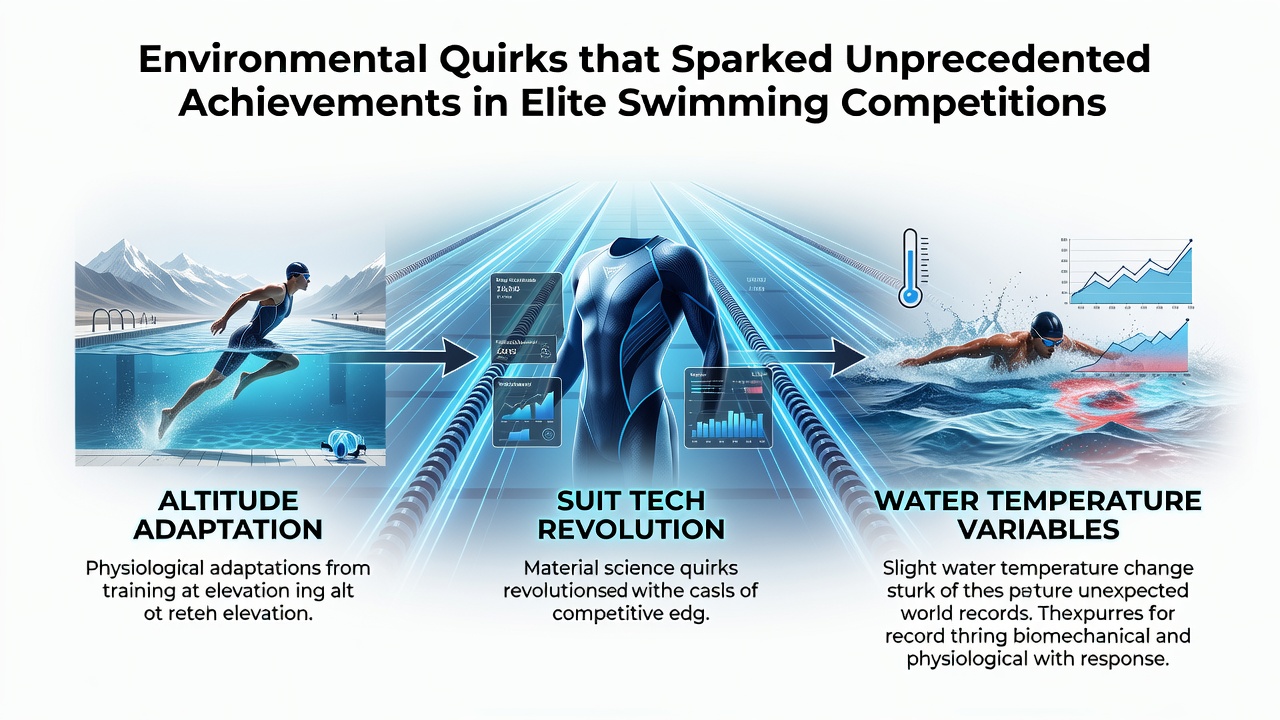
Elite swimming has seen times drop dramatically when pools encounter specific environmental conditions that alter water resistance, buoyancy, and athlete physiology, and researchers have documented these patterns across multiple Olympic cycles and world championship meets. One such factor involves water temperature staying within a narrow band that optimizes muscle function without causing excess drag, while another centers on pool depth and gutter systems that minimize wave rebound and allow swimmers to maintain higher speeds through turns and finishes.
Pool Architecture and Water Flow Dynamics
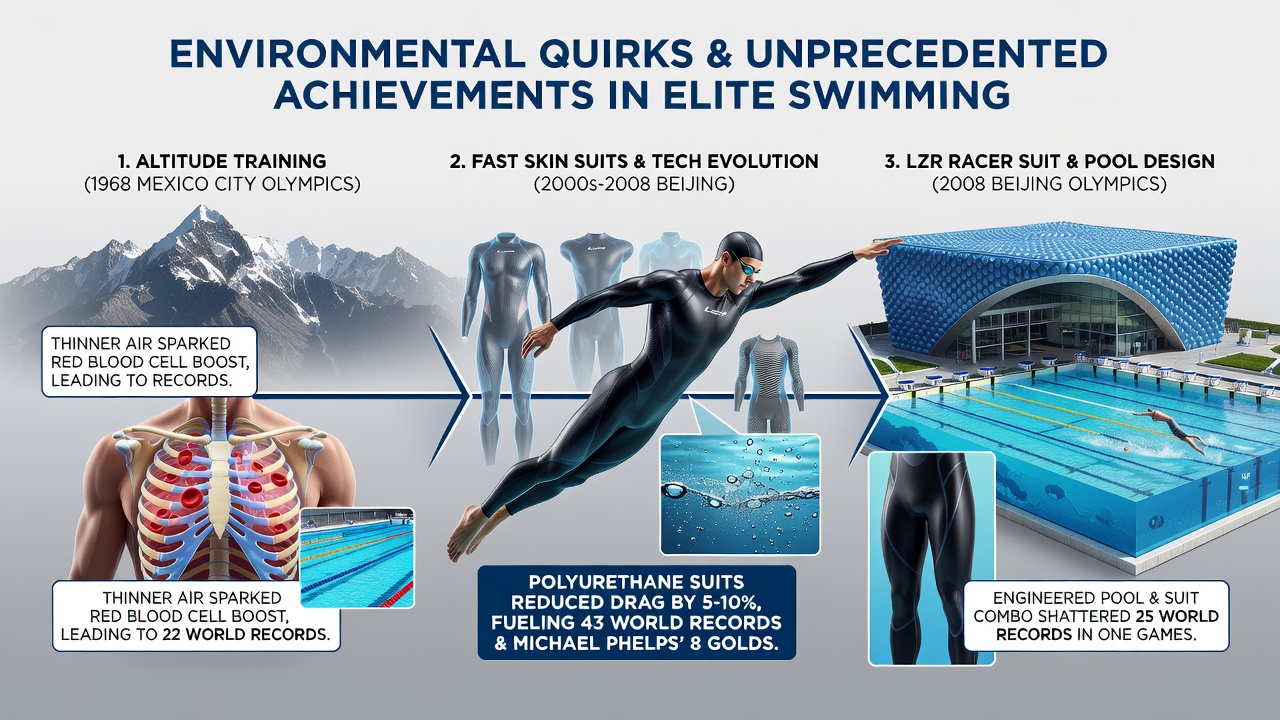
Facilities built with deeper basins and advanced overflow gutters create conditions where turbulence dissipates faster, and data from international meets shows athletes posting faster splits when racing in these venues compared to older shallow pools. The 2008 Beijing National Aquatics Center featured a design that reduced surface waves through its unique filtration and lane divider setup, resulting in multiple world records during that Games, while similar engineering choices appeared in later facilities in Europe and Australia.
Observers note that water salinity levels also play a role, since slightly denser water from controlled chemical balances provides marginal buoyancy gains that help sprinters hold better body position through the stroke cycle. Studies conducted by sports science teams in Canada have tracked how these micro-adjustments accumulate over 50-meter and 100-meter events, leading to cumulative time savings that separate medalists from the rest of the field.
Altitude and Atmospheric Pressure Effects
Training and competition at moderate altitudes have produced measurable shifts in performance because thinner air reduces oxygen availability yet can decrease aerodynamic drag on the body above the water line during breathing phases. Swimmers who acclimatize properly often record improved stroke efficiency, and records set at venues like those in Colorado and Mexico have stood as benchmarks for years afterward.
Atmospheric pressure variations tied to weather systems further influence these outcomes, since lower pressure days can coincide with faster overall meet times when combined with favorable water temperatures. Researchers from institutions in Australia have compiled meet data showing clusters of personal bests during periods when barometric readings dipped below seasonal averages, and these patterns repeat across both indoor and outdoor facilities.
Temperature and Humidity Interactions
Air and water temperatures that align within precise ranges allow swimmers to maintain core warmth without overheating, which preserves energy for the final laps where fatigue typically sets in. When humidity rises alongside these temperatures, the body sheds heat less efficiently yet muscle elasticity can improve, creating a narrow window that some athletes exploit better than others during championship sessions.
Events scheduled for June 2026 will take place amid ongoing monitoring of these variables by governing bodies, with preparations already underway to ensure pools meet the exact specifications that have historically enabled breakthrough performances. Data compiled from previous cycles indicates that venues maintaining water between 25.5 and 26.5 degrees Celsius alongside controlled air conditions consistently produce higher numbers of national and continental records.
Case Examples from Recent Cycles
Take one major international meet where a sudden shift in pool filtration rates coincided with an unprecedented number of sub-record times in the distance events, because the resulting water clarity and flow patterns reduced visual distractions and allowed better pacing. Another instance occurred when a coastal facility experienced minor salinity increases from environmental factors, leading to several sprint records that observers later attributed partly to the altered water density.
Those who have analyzed performance databases note that these quirks rarely act in isolation, since altitude combines with temperature and pool design to create multiplicative effects rather than simple additive ones. Cross-sport mentorship networks have also transferred knowledge about adapting to such conditions, with coaches who worked in track and field environments applying similar acclimatization protocols to swimming programs.
Conclusion
Environmental variables continue to shape outcomes in elite swimming because they interact directly with human physiology and equipment standards, and governing organizations maintain strict oversight to balance fairness with performance potential. As competitions approach in 2026, tracking these factors remains central to understanding how records evolve across different host cities and facility types.